About to Hire for Your Agency? Please Wait. Do This First.
Before you hire, write the role as a list of small actions. Sort each one into automation or agent. Build a tool for one step and give it to the person doing the job. Then test it and improve it, the way you would train a hire. If you need someone right now, hire fast and build in parallel.
- Hiring costs you salary, search time, training, quality and margin
- An agency cut each email from 45 minutes to 5 and skipped two hires
- Use automations for fixed steps and agents for judgment calls
- Expect a weak first version and keep testing it like a new hire

If you run an agency and you are about to hire someone, please stop. Do this first. Then think about hiring.
This post is the written version of my video. Watch it here: https://youtu.be/Y3JxkOlMKvE

I know how you got here. You got busy. You got clients. You got demand. Then you did not have enough hands. So you thought, okay, I need to hire someone. And you wrote a job post.
Here is what that job post costs you, and what I do instead.
Why hiring is the most expensive fix

The first thing is the salary. Every month. You pay it for as long as they work with you.
The second thing is finding them. Good people take a long time to find. They cost money to find. Then it can take months to train them to the point where they deliver what you want.
The third thing is quality. Say this is something you used to do yourself, and you did it well. A new hire will not match that at the start. That can hurt the product and the service for a while.
Then there is the risk that they leave. Everything you spent on them walks out the door with them.
And the last one is margin. Every time you hire, your margin goes down. I have seen businesses doing millions a month with margins of 7, 8, or 10 percent. Why? Because they are bloated with people.
A client who did not hire

Evernue is an email marketing agency I worked with. They were supply constrained. They had a couple of copywriters, and each one could write about 9 to 12 emails a day, because one email took 45 minutes.
They were about to hire a third copywriter and a fourth at the same time. The demand was there.
We built an automation and a custom platform for them instead. One email went from 45 minutes to 5. Same team, way more emails. The hires never happened.
You know the problem. You know the fix. Now here is how to do it.
Any role is a list of small actions

Take an editor. What does an editor actually do?
- Cuts the silences and dead takes
- Creates the captions
- Does the zooms and cuts
- Picks the clip for the hook
- Does the final quality pass
All of those small tasks together are what we call an editor.
Now, building an AI editor sounds tricky. You do not know where to start. But can I build a script that cuts silences and dead takes? Yes. I am doing it right now with my own system. Can I build something that creates captions? Yes. Zooms and cuts? Yes. Picking the clip for the hook? Yes.
The final quality pass? I would leave that one to a human, for now.
So for any role you are hiring for, or want to hire for, write out those small actions. That list is what you automate. You do not have to automate all of it. Automate the first one, hand it to your editor, and say here is a tool that cuts the silences for you. They can now make a lot more videos. Then do the same for captions. Then zooms.
This is the part people miss. It is about giving one person the tools to do the work of many. One editor who could make 5 videos a day can now make 20 or 50 with the right tools.
Automation or agent
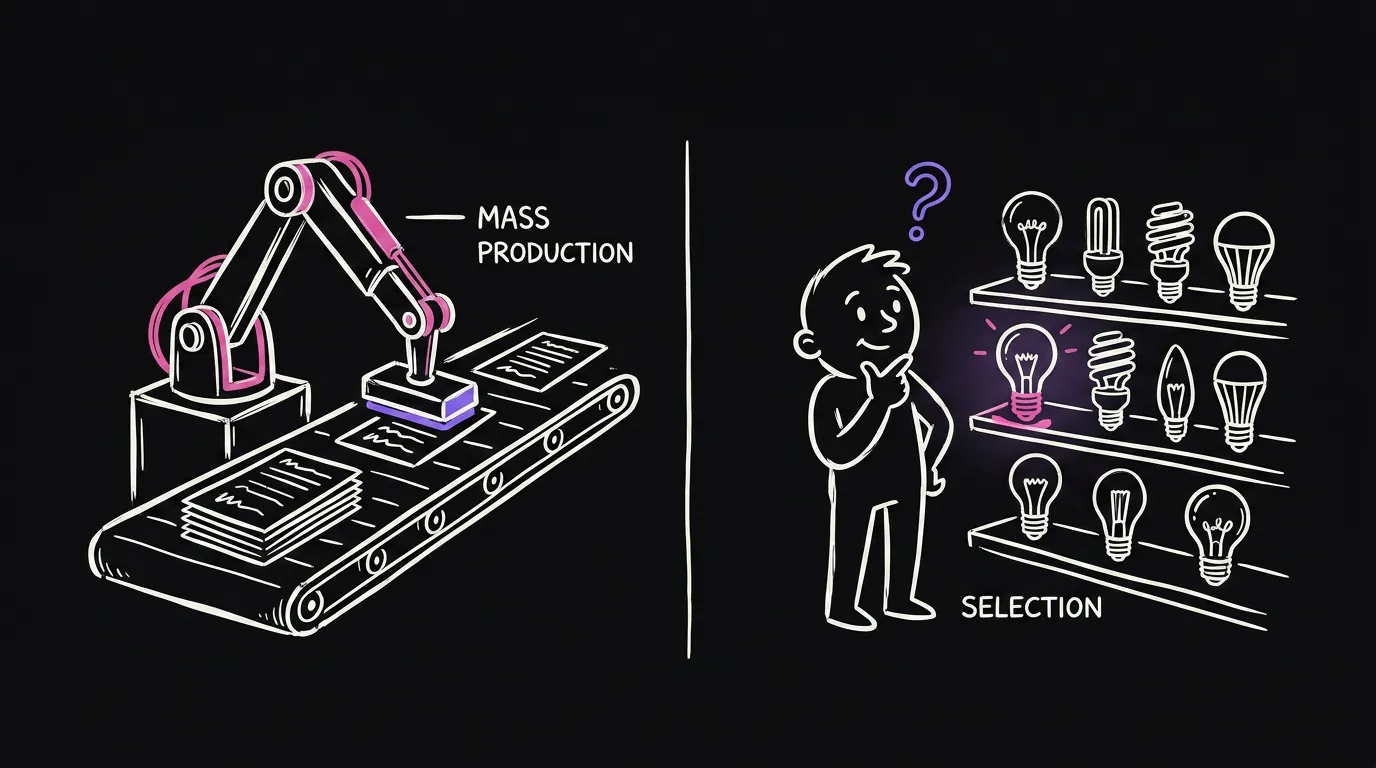
A lot of people get lost here. Do I need an automation or an agent?
| Automation | Agent | |
|---|---|---|
| The steps | Fixed. Same every time | Flexible. Can change |
| Decisions | None | Makes judgment calls |
| Good for | Cutting silences. If there is silence, cut it | Picking the best hook. Taste. Judgment |
| How much of your list | Most of it | A few steps |
Automations are things that are deterministic in some shape. There is not a lot of flexibility, and that is fine. Cutting silences is like that. If there is silence, you cut it. You need an automation for that.
If a step needs a judgment call, or some specific taste, that is where you use an agent.
Most of your list is automation. You do not need an agent for everything.
Train it the way you would train a hire
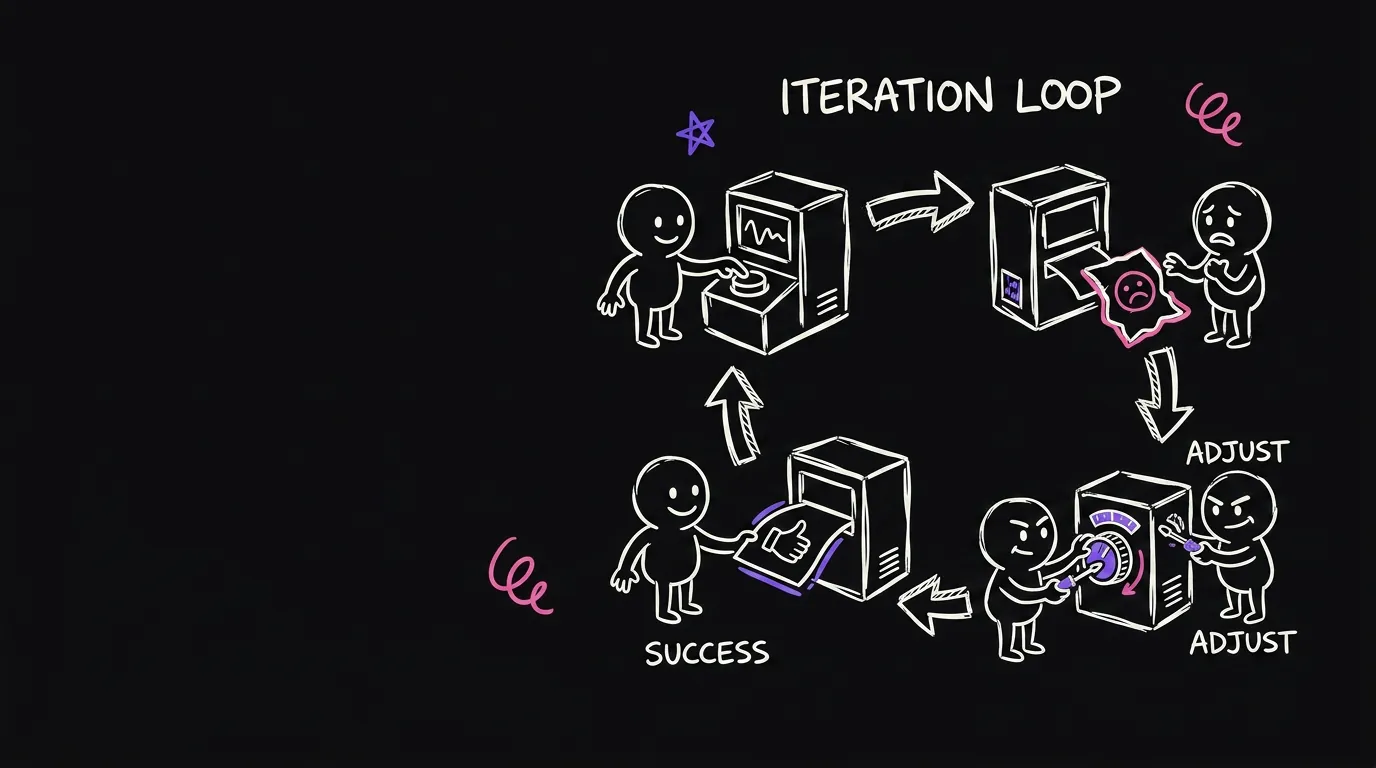
Let me save you a lot of time here, because these are mistakes I have made.
A lot of people say, this is cool, let me do this. They build an agent or an automation. It is not as good as they hoped. They say, this is not working, let me stop it. I have seen this so many times.
The problem is they treat it like it has to be perfect from day one. It does not.
When you hire, you train that person. You do not just say do this and expect it to be done. Same with a system. You build it, you make it better, you make it better again, and you keep going. It needs a lot of context about your business, and you will not give it all of that on the first try. You start somewhere and take it from there.
So first, you test it. It does a bad job. You are not happy. Sad face. Then you make some changes. It does a better job. You test again. You keep doing this until you look at it and go, oh, this is very cool.
Think about how much time and money it saves you in the long run. That is why the loop is worth it.
Build it yourself or pay someone
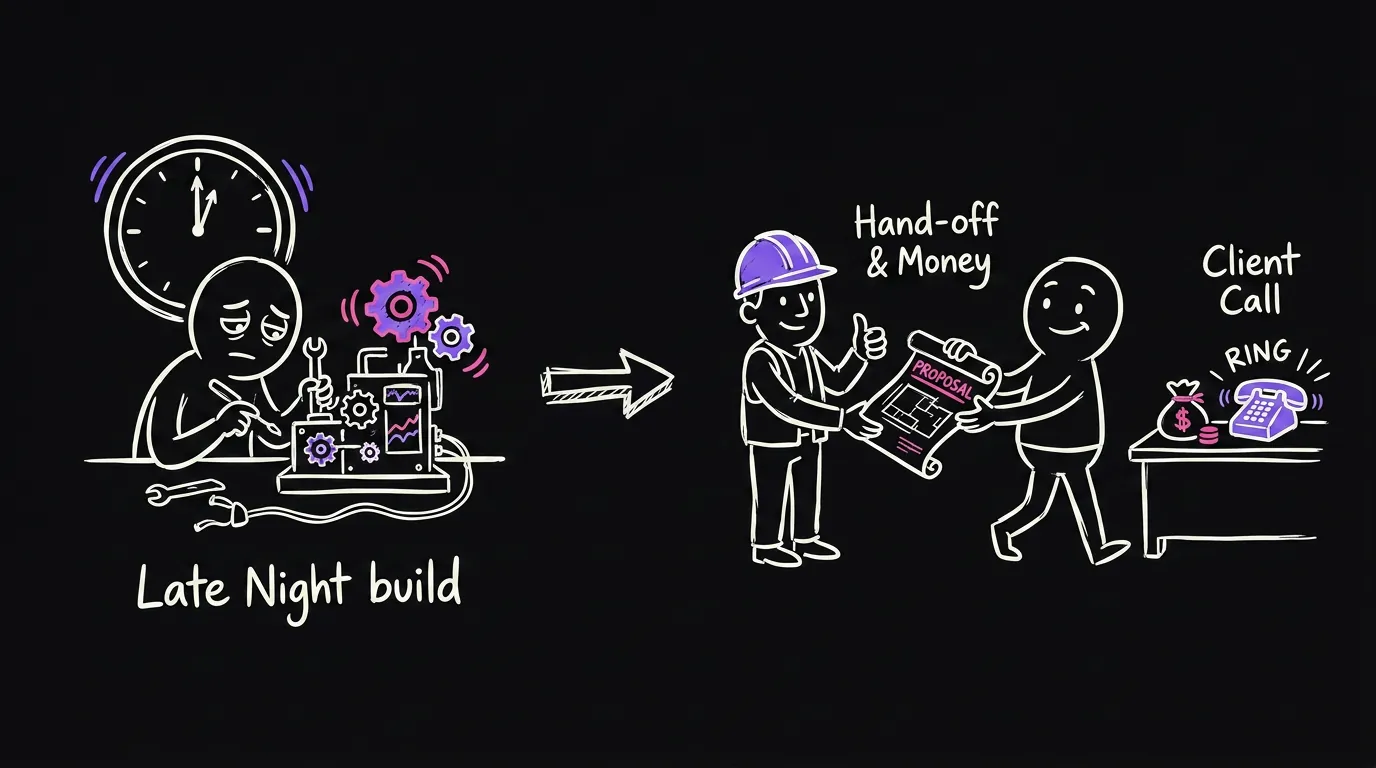
This one depends on how much money you make.
Say you run an agency making 100K a month. In a lot of cases, I would not build this myself. Every hour you spend on it is an hour with a price on it. If I pay someone 50, 60, or even 100 dollars an hour to build it, I come out ahead, because my hour goes on something that makes the business more money.
A lot of people think they save money by doing it themselves. There is an opportunity cost. If your time can go on something that brings in more, that is the better use of it. So I would delegate it. I would hire someone to build it.
If you do not have the money, then you build it yourself. That is fine too.
So you either build it yourself to save cash, and it costs your hours. Or you pay someone to build it, which costs cash, and you keep your hours.
Hire fast, build in parallel, then blend
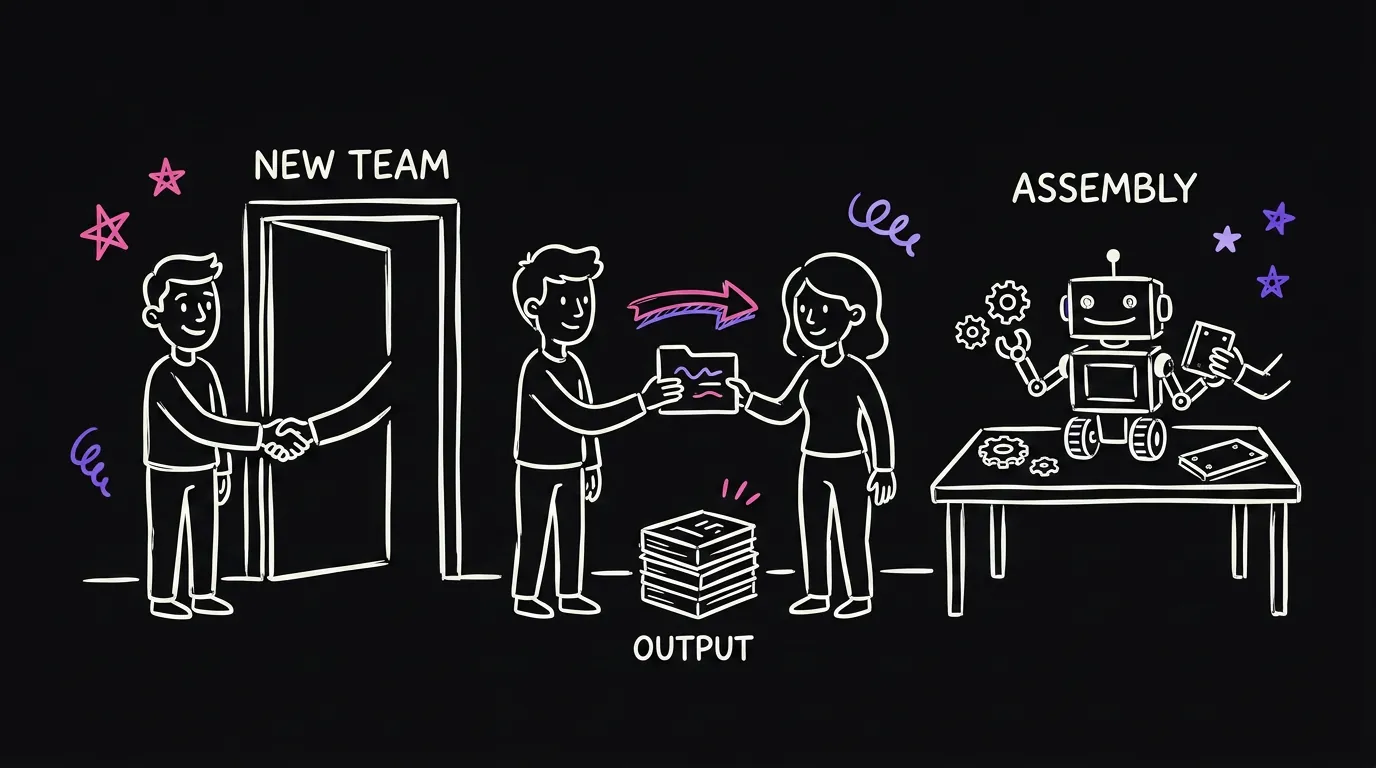
Last point. You do not have to go all in on this and refuse to hire. If you need to hire, hire. No problem with that. But build after it.
Here is a real example. I need editors right now, because we are running a lot of ads. I know how to build automation systems. I have a few. And I am still not going to build one right now to replace this hire. Why? Because I need someone good at editing this week. If I build a system first, it takes me a week, two weeks, three weeks, a month of testing and back and forth. In that time I am not running ads, and I am losing money.
So my logic is this. First, hire the person fast, because speed always pays. Then build the AI editor in parallel. Then compare. Then blend.
Blend is the important word. This is about giving humans what they need to do more. If I build an AI editor and hand it to my editor, and they are the one who gives it ideas and checks its work, I just made that editor 10 or 100 times faster.
FAQ
Do I have to automate the whole role?
No. Automate one step and hand it to the person doing the job. One tool that cuts silences already lets an editor do a lot more videos. Then add the next step.
What if the system does a bad job at first?
It will. So does a new hire in week one. Test it, change it, test it again. Most systems do not fail. They get stopped before they are finished.
Should I build it myself?
Do the math on your hour. If your business makes real money, paying someone to build it usually wins, because your hour goes on something that brings in more. If cash is tight, build it yourself.
What if I need someone right now?
Then hire. Speed pays. Build the system next to them, compare, and blend. The person with the tool does the work of many.
Run the exercise before you post the ad
Write the role as small actions. Sort each one into automation or agent. Train it by testing it. Decide who builds it. And if you need speed, hire and build at the same time, then compare.
That exercise is what I run for agencies every week. If you want help running it on your own roles, that is what we do at qemoza.ai.