The Things Actually Worth Automating, Ranked by What They Pay Back
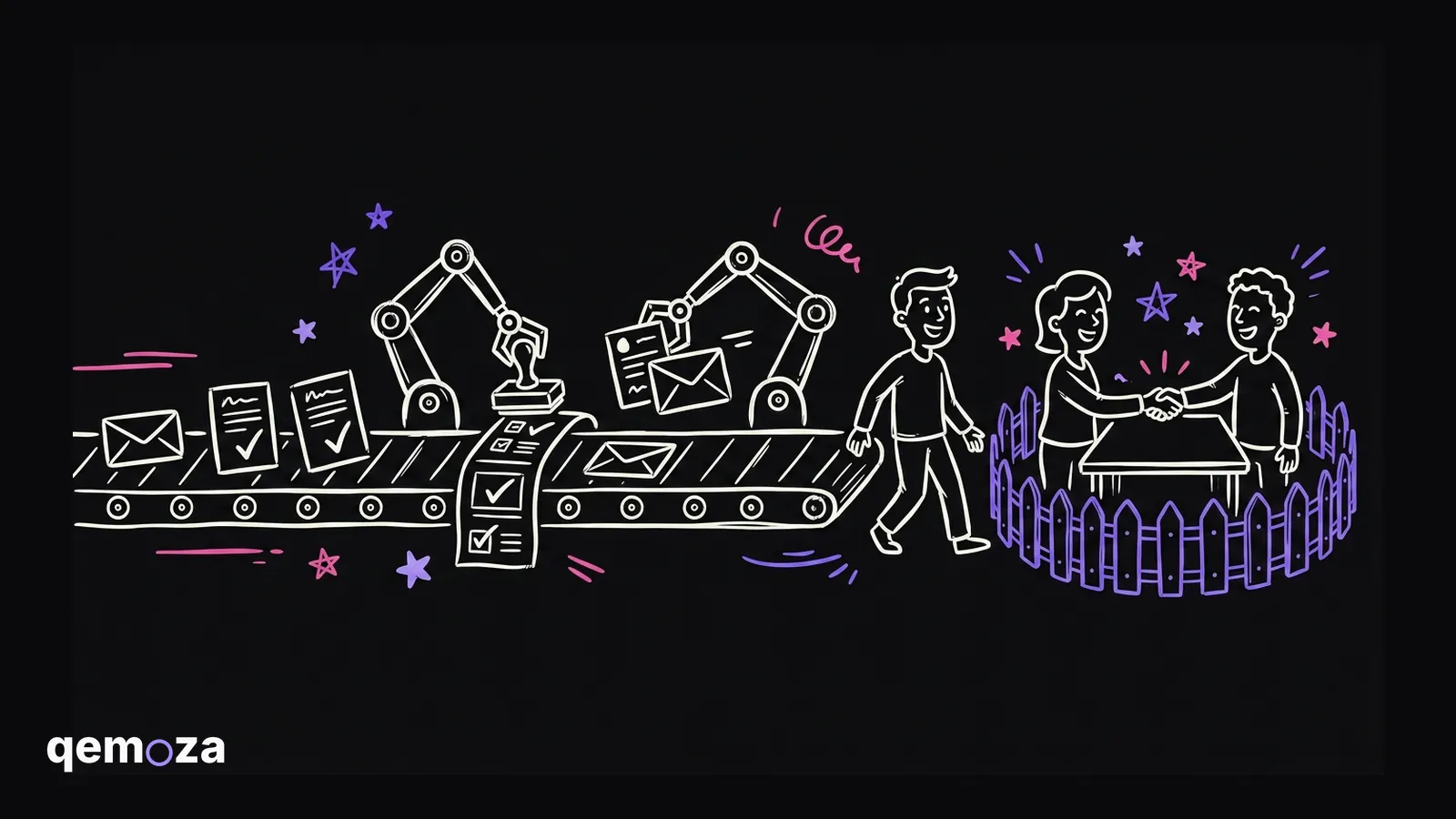
Automate jobs that pass three tests: they happen often, they take real time, and they sit close to money. Close to money means something breaks if the job is late, like a lost client or a deal going cold. Start with replies to new enquiries, the proposal after a call, and chasing people who went quiet.
- A job must pass three tests: how often, how long, how close to money
- The bigger return is work you stop losing to slow replies
- Next, automate call write-ups, client updates and new client onboarding
- Skip one-off jobs and jobs you have never done by hand
Most people automate the wrong thing. They do it for a reason that feels completely sensible at the time.
They automate whatever annoyed them most that week.
I understand why. The annoying job is the one you think about. It is loud. So you point the first system you ever build straight at it, you get almost nothing back, and you quietly decide this automation thing does not really work.
How much a job bugs you has nothing to do with what it pays back. Those two almost never line up.
The only test
Three questions. A job has to pass all three.
How often does it happen. Daily beats weekly. Weekly beats monthly.
How long does it take each time. Five minutes twice a day is worth more than two hours once a quarter.
How close is it to money. This is the one people skip, and it is the one that matters most.
Close to money means this. If I do this late, or I do not do it at all, what breaks? Do I lose a client? Does the deal go cold? Does the lead stop replying?
If nothing breaks, it is not close to money.
Two out of three is a hobby.
Two kinds of return
There is money you get back, and there is money you unlock.
Money you get back is hours. You stop paying for the time, so your margin goes up without you raising a single price.
Money you unlock is the work you were losing because you were slow. The lead who booked with someone else because they answered in four minutes and you answered the next morning.
Everyone starts with the first one. The second one is bigger.
Tier one, closest to money
The new enquiry. If you do not answer inside a couple of minutes, you lose leads you already paid for.
The proposal after the call. The call ends and the proposal goes out. Not three days later, when the feeling has gone.
Reactivation. The people who went quiet. Almost nobody chases them and almost everybody has a list of them.
Tier two, the biggest hours
The hour after every call. Writing up what was said, making the task list, sending it to the right person. Every call costs you that hour. It is the same hour every time, which is exactly what makes it automatable.
The client update. Instead of opening the ad account, pulling a report and writing it up by hand, the report writes itself and you edit it.
Onboarding a new client. Same steps, same order, every time.
Tier three, only after the first two
Keeping the task board honest. Copying the same thing between two tools. The overnight check that tells you a system broke while you slept.
These feel productive. They pay the least. Do them after the first two.
Four things I would leave alone
It does not repeat. People hire me to automate something they do once a quarter. There is nothing to automate.
You have never done it by hand. This one is the most common and the most expensive. Someone asks me to automate their lead generation. I ask what their process is right now. They tell me they do not have one. At that point they are not asking for an automation person. They are asking someone to invent the process, which is a completely different job. You cannot systemize a job you do not understand.
You just dislike it. The business does not exist to make your day nicer. If a job is not frequent and it is not near the money, disliking it is not a reason.
The judgment and the relationship. The calls. The decisions. Clients can tell. Give AI the scope and check the output. Keep the room.
Where to start on Monday
Write down every job you do. Mark two things against each one. How often you do it. How close it sits to money.
Start with the one that is high on both.
That is the whole method. Automate by return.
FAQ
What should I automate first in my business? Start with the jobs closest to money. That means replies to new enquiries, the proposal after a call, and chasing people who went quiet.
How do I know if a job is worth automating? Ask three things. How often does it happen? How long does it take each time? How close is it to money? A job has to pass all three.
What does close to money mean? It means something breaks if the job is late or never gets done. You lose a client, a deal goes cold, or a lead stops replying.
Which kind of automation pays back the most? The biggest return is the work you stop losing to slow replies. A lead you answer the next morning books with someone who answered in four minutes. Saving hours pays back less.
What should I leave alone? Skip jobs that do not repeat, jobs you have never done by hand, and jobs you just dislike. Keep the calls, the decisions and the client relationship for yourself. You cannot systemize a job you do not understand.