How to Stop Being the Bottleneck in Your Agency (and Finally Scale)
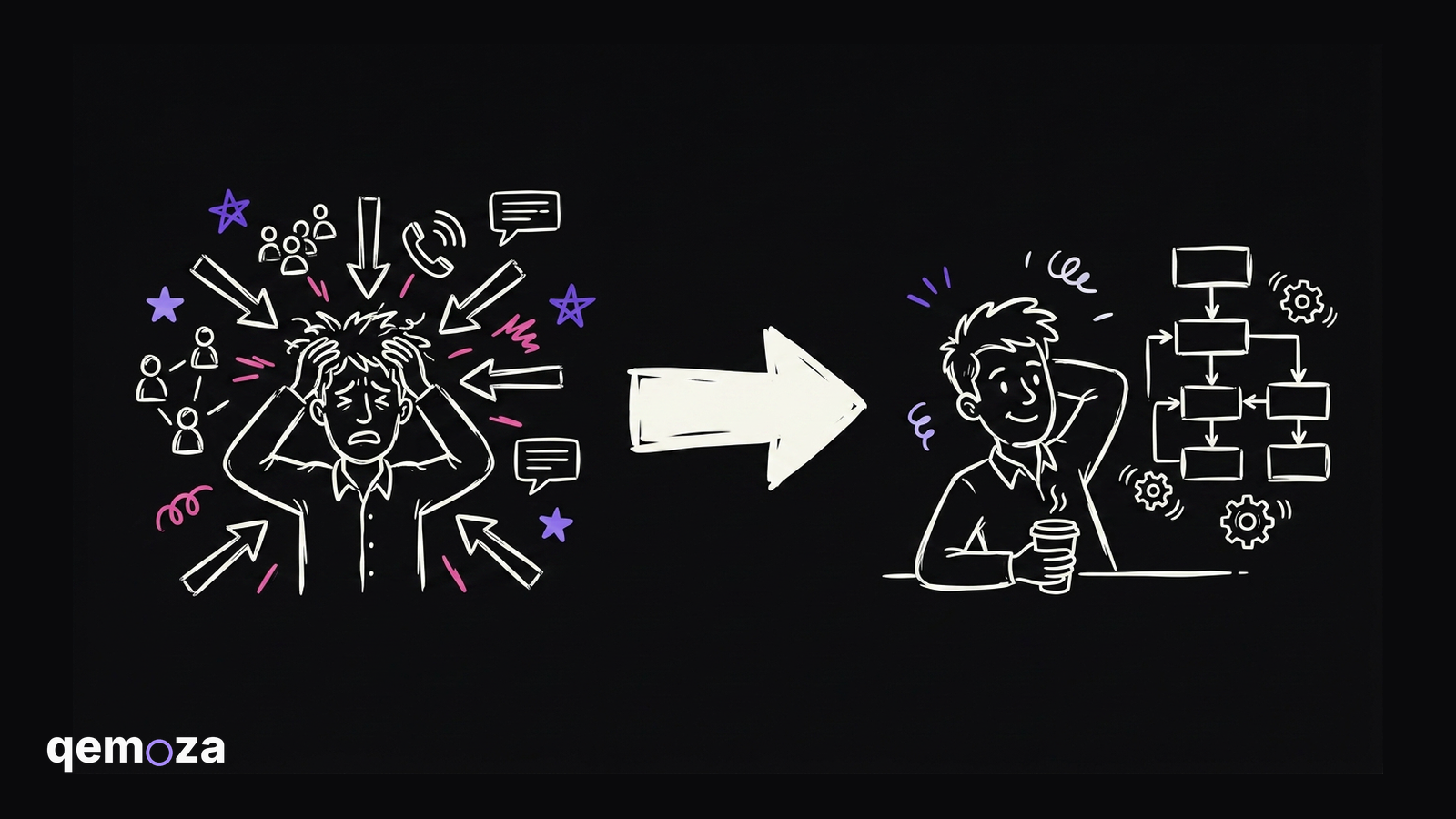
Today I want to show you how to stop being the bottleneck of your business. So you can finally scale. We are going to go through the first step you need to take to get there.
And if you are thinking who is this guy, fair question. I have helped more than 20 marketing agencies that were stuck in the same spot you are. Some of them built 4 million dollars in pipeline just by automating their fulfillment. I am not selling you anything here. I am just going to show you how I helped them, so you can do it too.
You are the bottleneck
Let me show you how you know.
If all your clients know you by name. If every time something happens, everyone comes back to you. If nothing moves without you. Then you are still the bottleneck. The business cannot grow past you. You are human. Your time is limited. So your business is limited too, because of you.
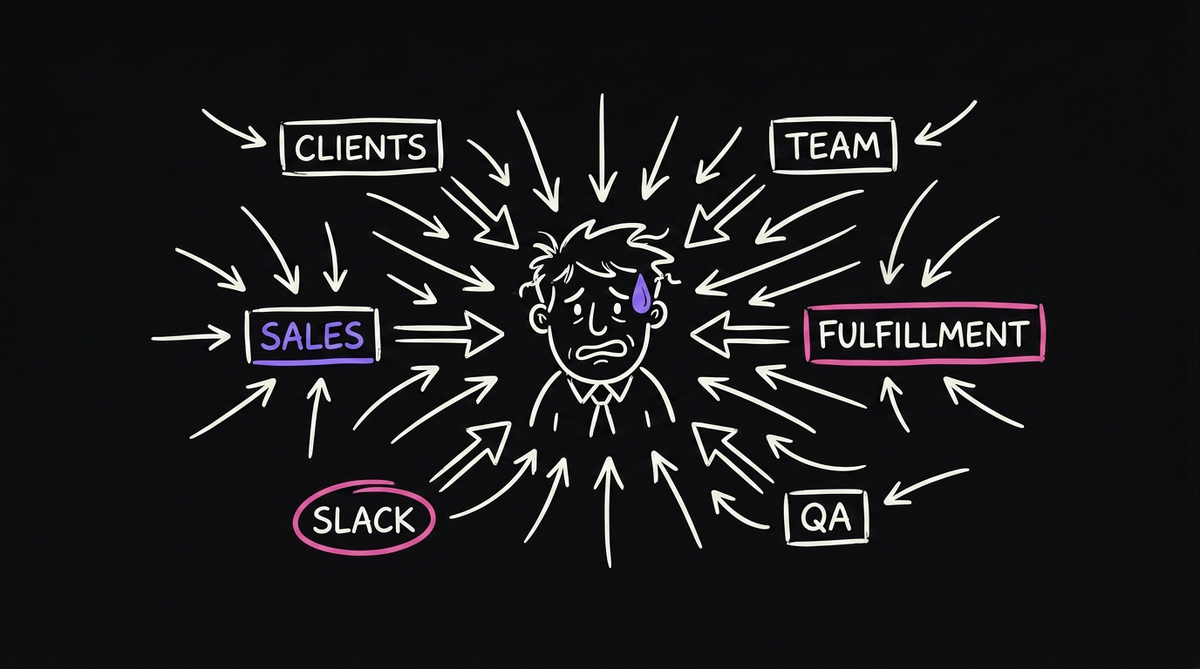
The loop you cannot get off
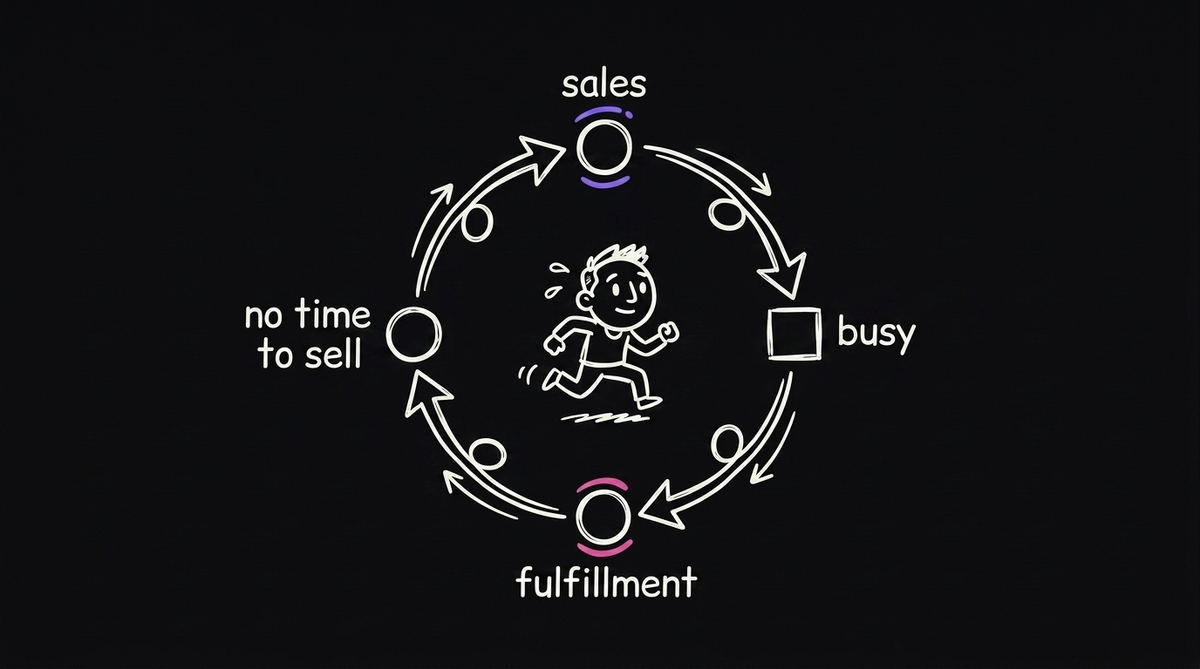
Here is the loop I see with most agency owners. You are good at sales. That is how you got your clients. In the beginning you do both, sales and the work, because you do not have many clients yet. But the more you sell, the more work you have to deliver. And you hit a point where you are so buried in the work that you cannot sell anymore.
If you stop selling, the business tanks. No new people coming in, plus churn, so you are not growing. So you get busy, maybe you make a few systems, maybe you hire someone, you breathe for a second, and then boom, you are right back in it. It feels like a cycle you can never get off.
You are smart. You have tried to get out. Most people try three things: hiring, tools, and SOPs.
Why hiring, tools, and SOPs do not fix it
| You try | What it promises | Why it does not fix the bottleneck |
|---|---|---|
| Hiring | More hands to share the work | You do double the work first (do it AND teach it). Slow, expensive, and good people leave. |
| Tools | Speed, less manual work | Everything still routes back to you. A problem comes up, the person comes to you. |
| SOPs | Your process written down | People drift back in weeks. You still have to be there to keep them on track. |
| A system | The work runs without you | It does not care how anyone feels that day. It just runs. This is the fix. |
Hiring works, to be honest. But to hire, you have to do double the work first. You do the work and you teach someone else to do it. It takes a lot of time and money. Good people cost more. To pay more you need money, to have money you need sales, and to sell you need time. And people leave. So you are back to teaching again. This is the slow, normal way that takes months and years.
Tools make things faster. But tools do not fix the real problem. Even with tools, everything still goes through you. If there is a problem, the person comes back to you. Because you are the magic of the business. You built it. You know how everything works.
SOPs feel like the answer. So you write some and hand them out. But here is the funny thing. People drift back in weeks. I have managed more than a thousand people in my life. SOPs do not hold on their own. They work as a reminder, so you do not explain everything again. But you still have to be there, or the team drifts. So you are still stuck in the work.
You are the chef stuck at the pass
Let me give you one example. I love examples.
Imagine you are the chef. You are great. People come in for your food. The more they come, the more you grow, until you cannot serve everyone yourself. So you hire cooks. They shadow you for a month, two, six. Some learn fast. But the recipes are still in your head. There is no recipe book. And there is no way to make anyone follow it.
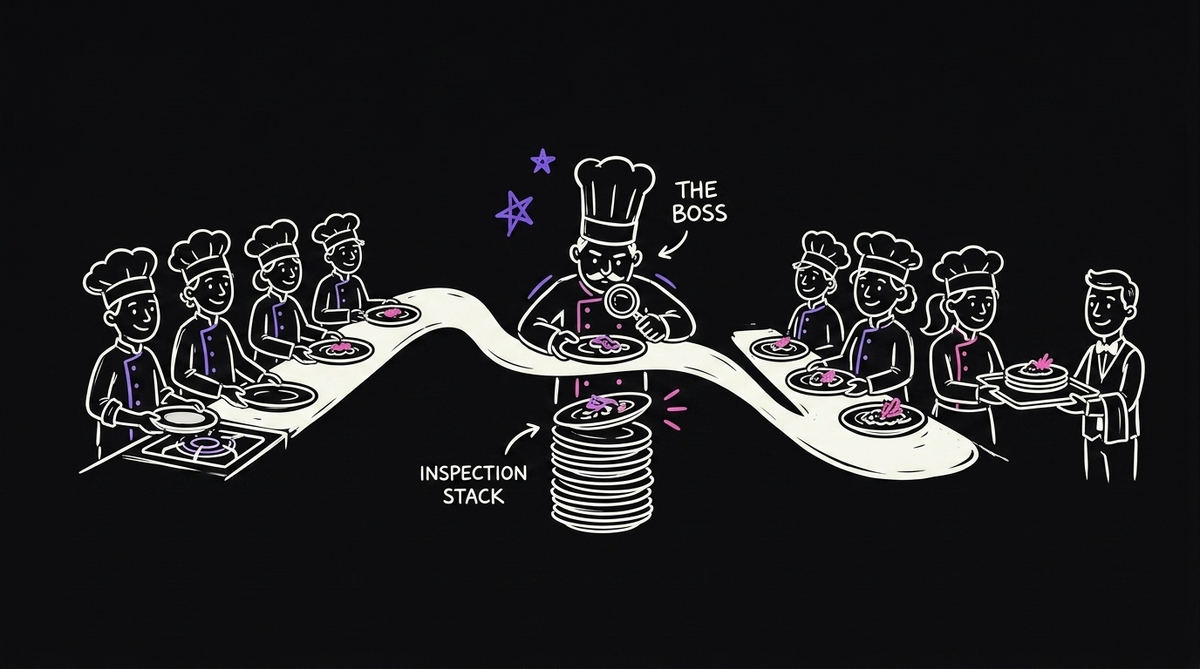
So even when the cooks know what to do, every plate still goes through you. At the pass, you check every single plate before it goes out. If you are sick, or you sleep, or you just take a day off, the quality drops. The business is fragile. Because everything runs through one person. You.
That is what we are fixing. We are getting the recipe out of your head.
The fix: a system, not an SOP
If you grew this business, the whole thing is in your brain. We need to get it out and turn it into a system. Not an SOP. A system.
A system does not care if you are feeling good that day. A system does not care if the employee wants to follow it. They follow it because that is how the system is built. Think of it like building your own tools. The team runs on the tools, not on you.
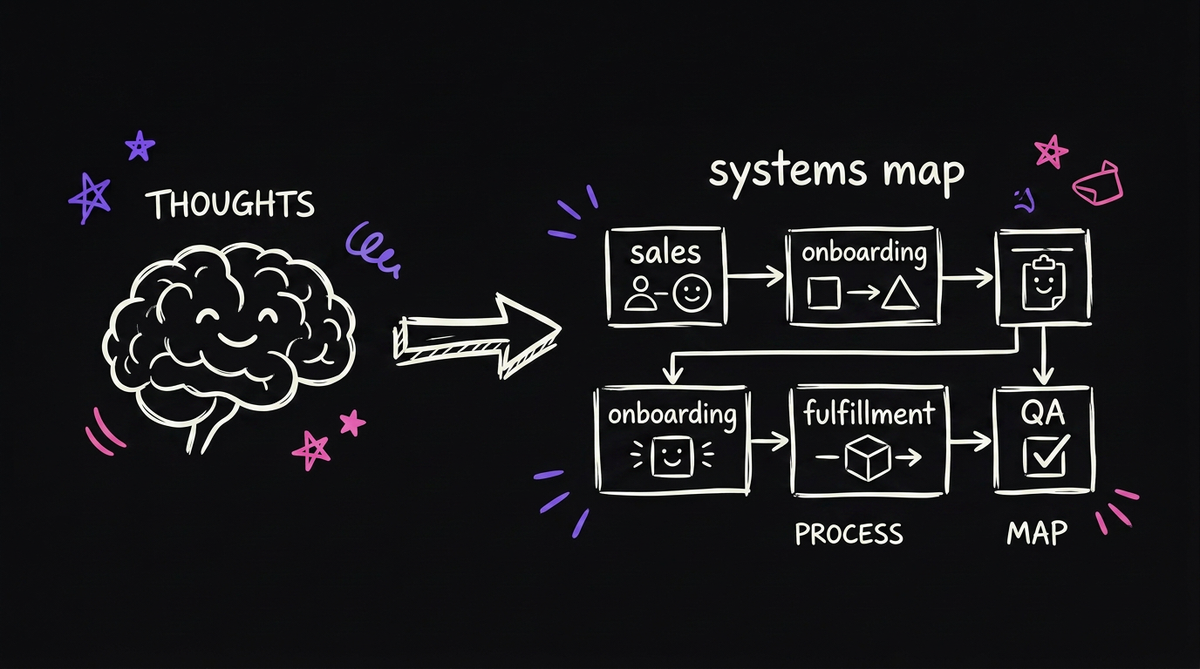
The first step is getting everything out of your head. Then we turn it into a system later. Today we focus on step one: getting it out. Because you cannot automate what you cannot see. If we cannot surface it, we cannot automate it.
The demo: one prompt, your whole business mapped
Here is how I do it. I use Claude. You can use Cowork, Code, or just chat. I will use Cowork because it is the easiest for everyone.
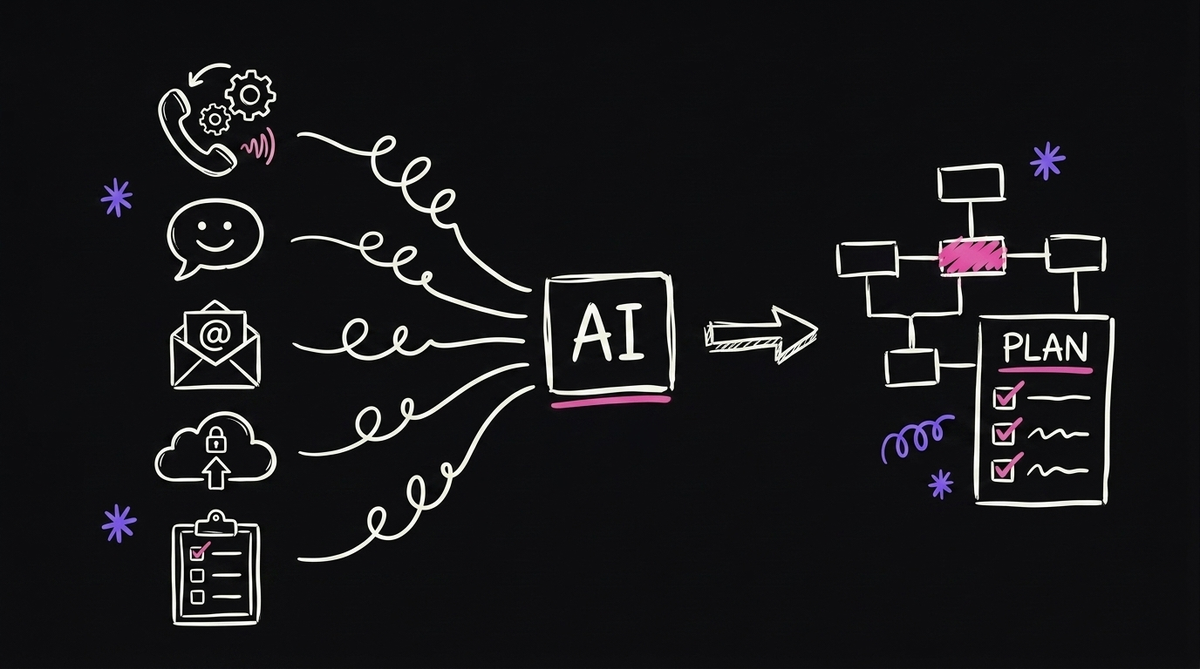
Step 1. Connect your tools. Go to customize and connect your apps. Your call recorder (Fathom, Fireflies), Slack, Gmail, Google Drive, ClickUp or Monday, whatever you use. Connect everything you can. Use your business accounts, not personal. The reason we connect everything is simple. I am not going to pull the knowledge out of your head by hand, that takes days. We let AI do it, by reading what you already built. Your past calls, your SOPs, your brand guides, your project tasks. Your onboarding calls and team calls will surface problems you did not even know were there.
Step 2. Paste one prompt. Open a new task, make sure you are on Opus because it is the smartest, and paste this:
You have access to my business through my connected tools. Read my last 25
Fathom transcripts (sales, onboarding, team). Then map every system in my
business: lead gen, sales, onboarding, fulfillment, client comms, QA, admin.
For each one tell me what it is, where the knowledge lives, exactly how to
automate it, and roughly how much time it saves. Output a visual systems map
and a written automation plan for my team. Start with the system where I am
the biggest bottleneck.
You can do 25 calls or 200. The more you give it, the more context it has. It will ask for a few permissions, just accept them. Then it pulls everything and gets to work.
What you get back
You get an agency systems map. It goes through everything and color codes it by where you are the bottleneck and what can be automated. For each system it shows what it is, where the knowledge lives (usually your head), why it is a bottleneck, what stays human, what can be automated, and how much time it saves. Plus the order to roll it out, starting with your biggest bottleneck.
This is the blueprint. It shows you the problems AND how to fix them. It is like an SOP, but way more advanced. Now we turn it into a system. A system is usually an automation, or it can be a platform.
Then you can take any piece and ask it for a flow chart plus a scope for a developer to build it. So you have two paths. Build it yourself, or hand the flow chart and scope to a developer who builds it for you. Depending on the project that can cost anywhere from 2K to 20K.
One more thing, and this is where it gets powerful. You can make the agents smart by teaching them how you work. Say you build an intake agent. I feed it how I actually decide things. Is the project fixed or retainer. How big is the task. Is it truly urgent, and what makes it urgent. All that context lives in my head, so I have AI pull it from my calls and messages and write it out step by step. Now the agent thinks like me. So it is not some automation no one uses after a day. It is your real process, in a system.
Then you step out and scale
Once your brain is in a system, you can step out of fulfillment. New hire? Easy to teach, the tool already does 95 percent, you just say do this and do that. New client? Easy to onboard. The business does not rely on you anymore. You are not the center. You can finally take days off without checking Slack every few seconds.
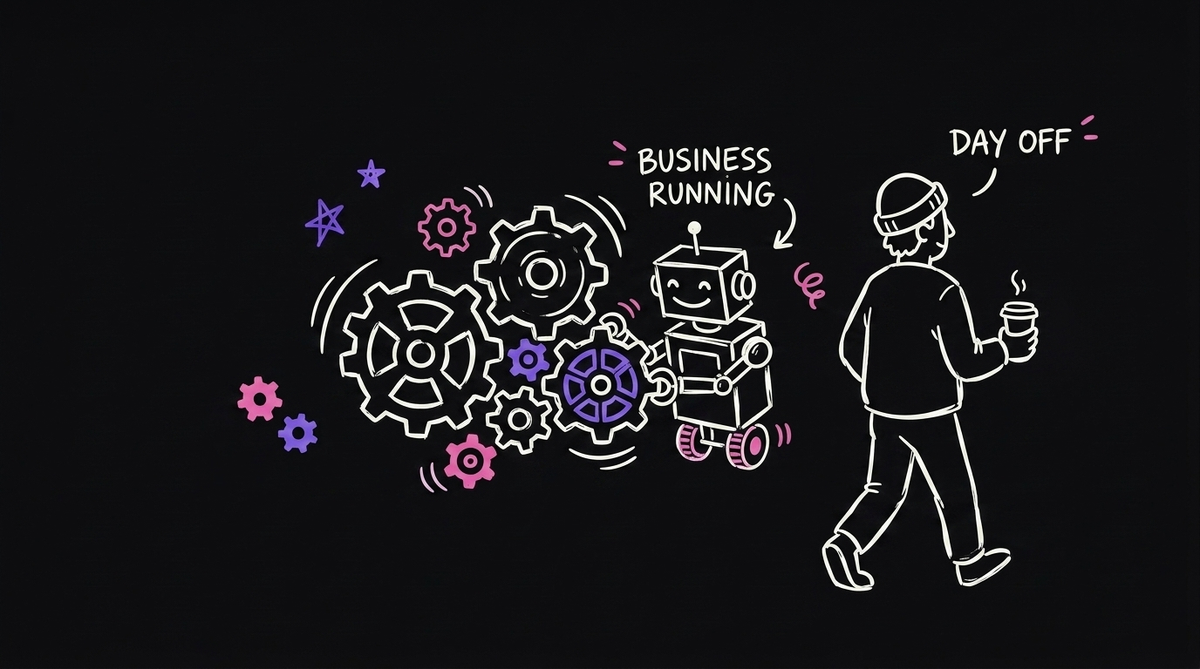
I am not going to lie to you. This is not easy. I am showing you the blueprint, and the build is hard. But if you want to double your client capacity and actually scale, this is the way. Even hiring stops being 50 SOPs and 20 coaching calls. It becomes here is the tool, just do this part.
FAQ
What does it mean to be the bottleneck in your agency? It means the business cannot run without you. Clients know you by name, the team comes to you for every answer, and quality drops the moment you step away. Your time becomes the cap on your growth.
Why do not SOPs fix the bottleneck? SOPs are a reminder, not a system. People drift back to their own way in a few weeks, so you still have to be there to keep the team on track. A system runs whether or not anyone feels like following it.
How do I get my process out of my head? Connect your tools (calls, Slack, email, drive, project manager) to an AI like Claude, then ask it to read your real calls and map every system in your business. It surfaces what is in your head from what you already built, so you can turn it into a system.
Do I need to be technical to do this? No. The first step is just connecting your tools and pasting one prompt. To build the automations you can either do it yourself or hand the map and scope to a developer.
How much does it cost to build the automations? It depends on the project. A single automation can cost anywhere from 2K to 20K to build, depending on how complex it is. The map and plan you can get yourself.
Want more like this?
I am breaking the whole thing down, step by step. If you want more like this, follow along on qemoza. There is a lot more I want to show you. Let's scale.
Written by Hamza Oulad, who builds the AI systems, with Finn Harris, who runs the paid-media side. Together they are qemoza, the AI ops partner for agencies.