How to Audit Your Business and Find the One Thing to Fix
How to Audit Your Business and Find the One Thing to Fix
You have probably seen a lot of videos telling you to use AI for this, or use AI for that.
Here is the problem with all of them. They tell you to automate something. They never tell you which thing.
And if you run a small business, you do not have spare time or spare money. So you cannot build ten things and hope one works. You need to build the thing that actually moves the business.
This is the audit we run before we build anything. Same process every time, on more than 30 businesses. It takes an afternoon.
You can fix everything. You should not.
Every day gives you a new problem. A client is angry. Something broke. The inbox is full.
And you want to fix all of it. That is normal. The trouble is you have a long list and no way to rank it, so you fix whatever shouted loudest that week.
Do that for a year and you will be tired and the business will be in the same place.
Here is the shift. Even if something is a problem, that does not mean you should fix it. You fix the constraint, not the thing bugging you. The constraint is the one thing the whole business is waiting on.
Find that. Fix only that. Then go find the next one.

Step 1: map what actually happens
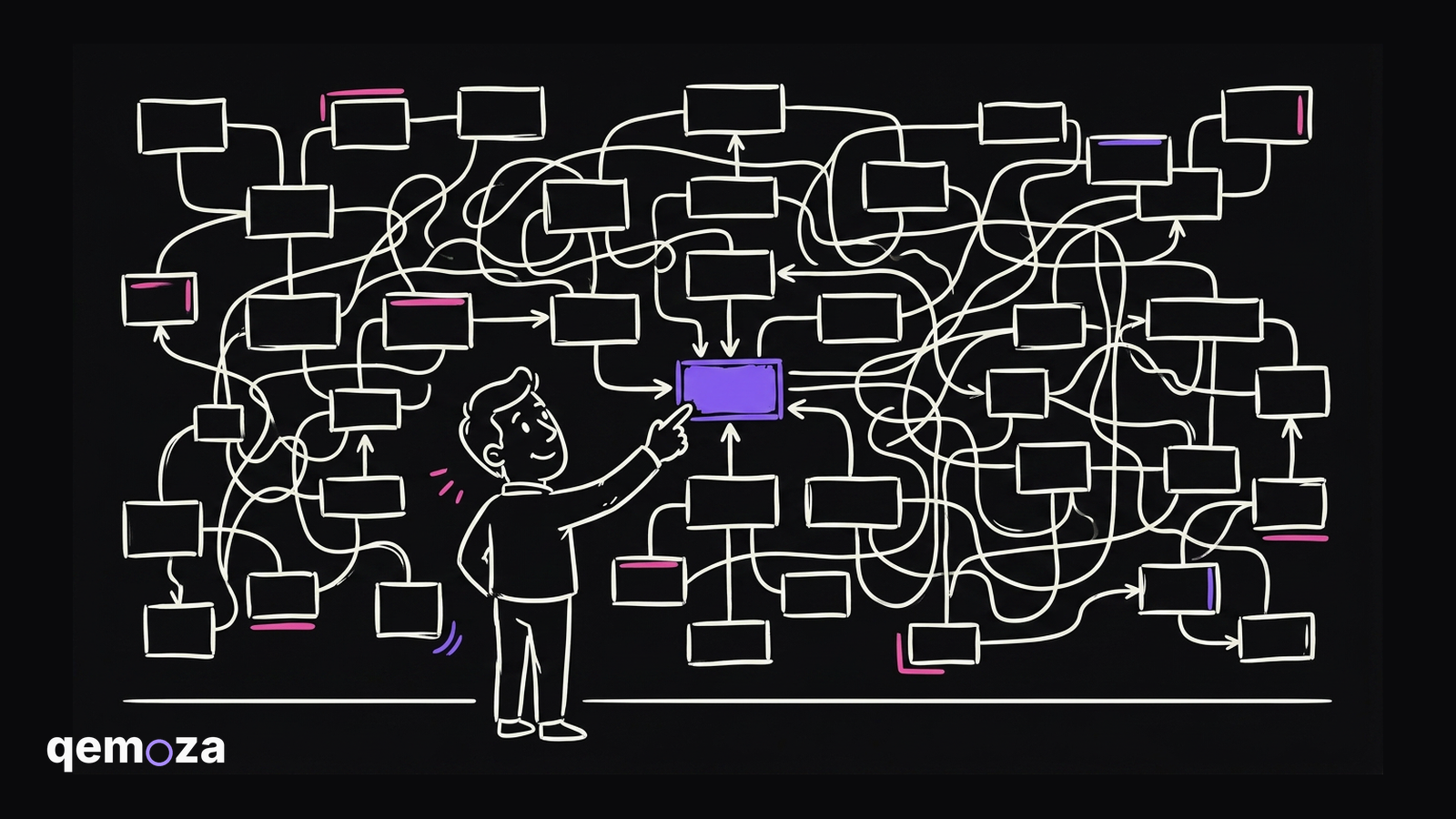
Draw your business, start to finish.
Marketing, then sales, then delivery, then what happens after. Someone sees your content. They land on a page. They fill in a form. A rep calls them. You pitch. You send a proposal. They buy. You deliver. Then they stay or they leave.
Draw all of it. On paper is fine.
Two rules, and the second one is the one people get wrong.
Draw it end to end. Most people stop at the sale. A lot of the problem lives after it.
And draw what you actually do, not what your SOP says you should do. If a step really sits in someone's inbox for three days, that is a step. Put it in. If you draw the perfect chart that nobody follows, you have learned nothing.
If you do not have this written down anywhere, that is your first job. You cannot fix what you cannot see.

Step 2: one question
Are you supply constrained or demand constrained?
This is the fork in the road, and it saves you the most time of anything here.
Supply constrained means people want to buy and you cannot deliver. If five more clients signed tomorrow that would be a problem, not a win.
Demand constrained means the opposite. You have room. The calendar is quiet. Nobody is filling the space you have.
You have to know which one you are, because they need opposite fixes. The most expensive mistake I see is a supply constrained business pouring money into ads. Now you have the same problem plus a worse reputation.

Three ways to tell
| Question | Supply constrained | Demand constrained |
|---|---|---|
| Could you serve five more clients tomorrow, not just sell them? | You flinched | Yes, easily |
| What is late right now? | Delivery, deadlines, replies | Nothing. The calendar is empty |
| Where does your week go? | Mostly delivering | Mostly chasing people |
The last one is the weakest test on its own, because you can be buried in delivery and still have a demand problem. The first two are the ones to trust.
If you are honestly both, fix supply first. Adding demand to a business that cannot deliver just widens the crack.
Step 3a: if you are supply constrained, count the hours
Now you only look at half the business. That is the point of step 2.
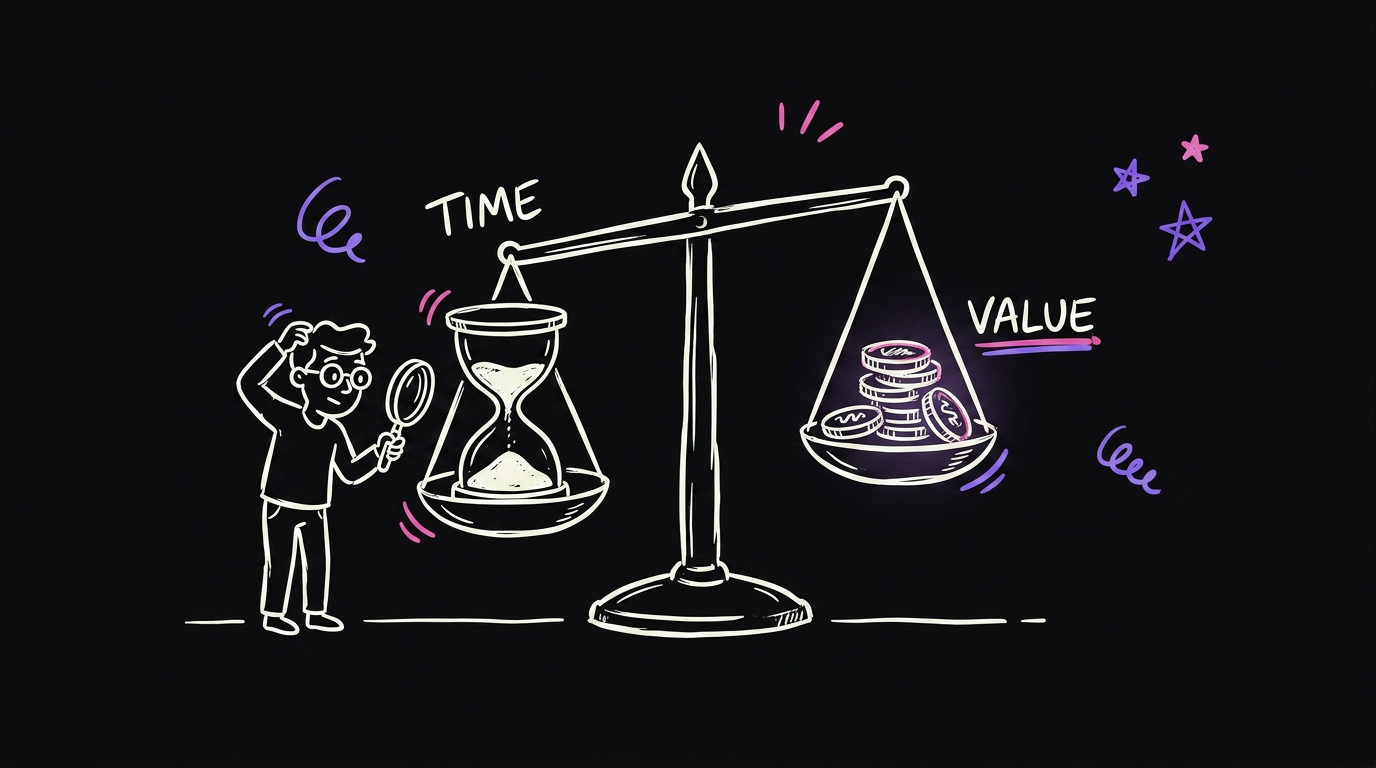
For each activity, work out two numbers.
How many hours a month. How long it takes once, times how often it happens. Forty five minutes, twelve times a month, is nine hours.
What it is worth. And this is the one people skip.
Hours on their own tell you nothing. Something can eat twenty hours a month and be the most valuable thing you do, so leave it alone. Something else eats fifteen hours and nobody would notice if it vanished. Worth is not only time saved either. It can be the return: if I do this, clients stay longer.
You need both columns. With only hours, you will cut the wrong thing.
The ones to start with are high hours and low return. Every business has three or four, and most owners have never seen them written next to each other.
Step 3b: if you are demand constrained, use RACE
Different problem, different tool. RACE splits the journey into four parts so you can see which part is actually broken.
Reach. Are enough people seeing you at all?
Act. Of the people who see you, how many take a first step? Click, watch, book, fill in the form.
Convert. Of those, how many actually buy?
Engage. Once they buy, do they stay? What are they worth over the whole relationship?
Put your real numbers on all four and look for the one that is obviously worse than the others. That is your problem. One of them, not all four.
A common one: reach is fine, act is fine, convert is terrible. Plenty of people finding you, plenty booking a call, almost nobody buying. Buying more ads there would have made it worse and more expensive.
No data is the finding
A lot of people sit down to do this and cannot answer the questions. How many leads last month? Not sure. How many became calls? No idea.
That is not a failure. That is your step one.
You do not need much. Leads a month, how many become calls, how many show up, how many no-show, what a client is worth, what one costs to get. That is enough to start.
If you do not have it, go and get it. Roughly, by hand, for last month only. That is enough to begin. You cannot improve a number you do not have, and you certainly cannot tell which of four things is broken if you cannot see any of them.
Look for where a small move doubles the business
Here is why we do all of this.
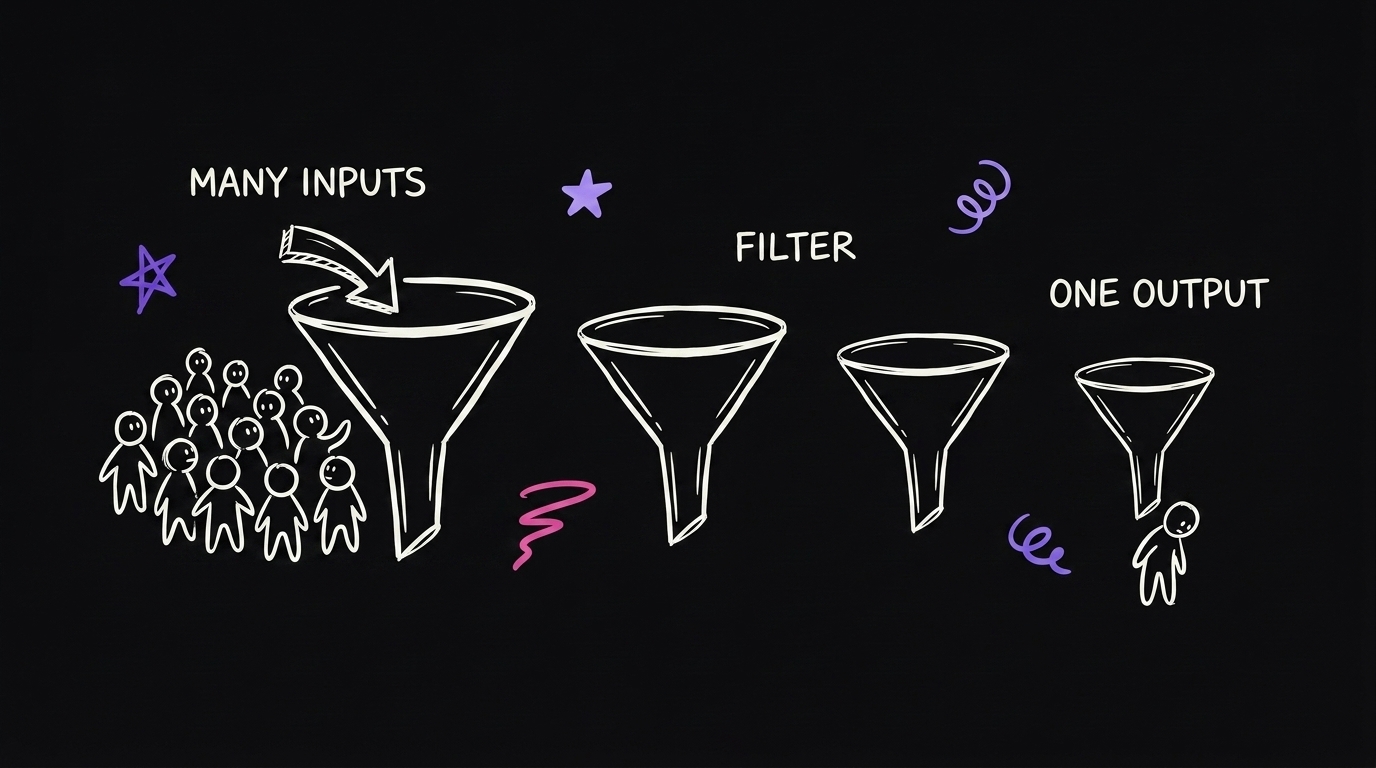
Most people find ten things worth improving and work on all ten. Each gets a little better, nothing really changes, and it is exhausting.
The better question is: which one, if I fixed it, would multiply?
Say your conversion rate is five percent and you take it to ten. That is not five percent better. That is one hundred percent better. You just doubled the business with the same traffic and the same team.
That is leverage. Everything else is effort.
And you cannot find those spots by feel, because they never feel like the urgent thing. The urgent thing is the loudest thing, and the loudest thing is almost never the constraint.

The third option nobody considers
Last one, and it is the part almost everybody misses.
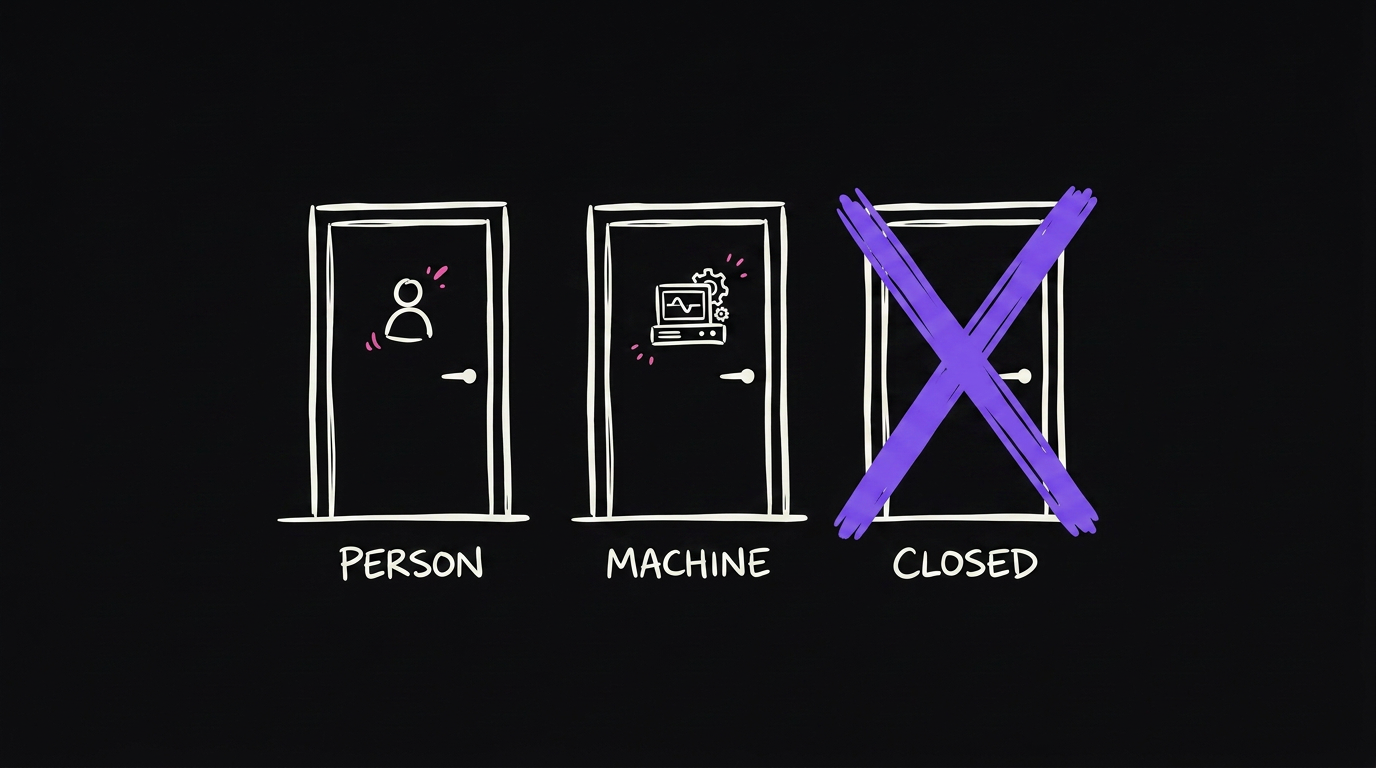
When people find the painful step, they think they have two choices. A person keeps doing it, or a machine starts doing it. And they jump straight to the machine, because that is the exciting one.
There is a third option. Nobody does it. You stop.
Here is a real example. Say part of what you sell is a fully custom dashboard for every client. It is an upsell, sort of. It takes a pile of hours, it is a headache, and half the time you cannot build exactly what they asked for.
So you think: let me use AI to make these faster.
But hang on. Why are you building a fully custom one for every client at all? Nobody made you promise that. You did. And now every client costs you those hours, forever.
You could just stop. Standardise it. Offer three versions instead of infinite. Take it out of the package. The problem is gone in an afternoon, for free, with nothing to build and nothing to maintain.
So ask three questions about each thing on your list, and ask the last one first:
- Should this exist at all?
- Does a person need to do it?
- Can a system do it?
Ask "should this exist" first, because it is the only one of the three that costs you nothing to try.
One honest warning. This is not permission to drop anything hard. Sometimes the painful custom work is the product, and dropping it makes you a commodity. The test is whether the pain is buying you something. If it is, keep it. If you promised it out of habit and nobody would miss it, that is the cheapest win in the whole audit.
The whole thing in one list
- Map what actually happens, start to finish, past the sale.
- Decide: supply constrained or demand constrained?
- Supply: hours a month, and what it is worth. Demand: RACE.
- Get the numbers. If you do not have them, that is step one.
- Find where a small move multiplies.
- For that one thing, ask: should this exist, does a person do it, or can a system do it?
You can fix everything in your business. You should not. The whole job is knowing which one.
FAQ
How long does this take? An afternoon for the first pass if you already know your numbers. If you do not have data, give yourself a month of counting first, even by hand.
Do I need software for it? No. Paper and a spreadsheet are enough. The value is in the thinking, not the tool.
What if I am supply and demand constrained at the same time? Fix supply first. More leads into a business that cannot serve the ones it has makes everything worse.
Where does AI actually come in? Only at the very end, and only for the things that are the same every time with no decisions in them. If a step needs judgment, taste, or a relationship, that is a person's job. And some steps should just stop.
We are a small team. Is it still worth it? More so. The smaller you are, the more expensive it is to spend three months building the wrong thing.
I build internal systems for businesses that are stuck in delivery. Every one of them starts with this audit, because you cannot add leverage to a business nobody has measured.
If you want me to run it with you, it is at qemoza.ai. You leave with the map either way.
Watch the full walkthrough: Stop Using AI on Everything. Do This Audit First.